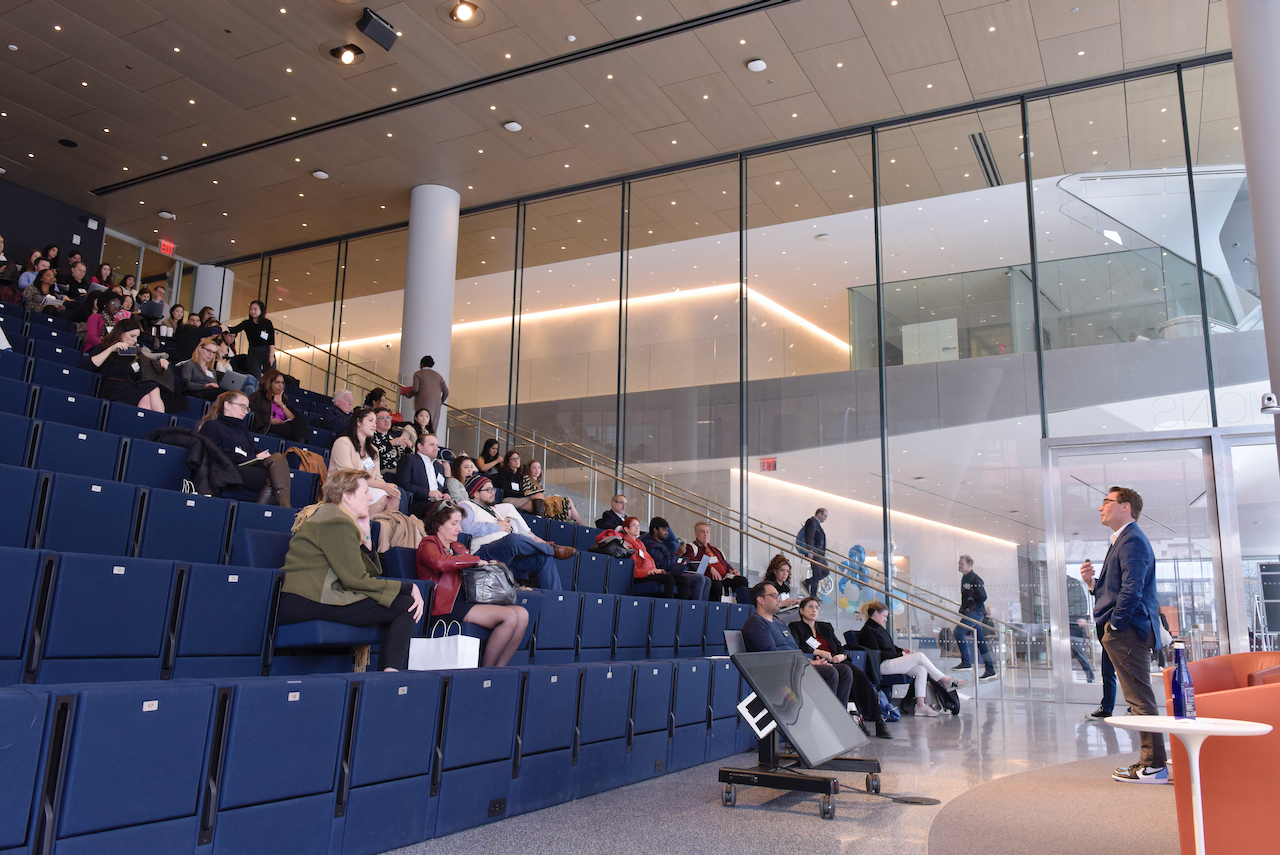
A Cross-Constituency Workshop on Continual Learning (organized by Hong Namkoong with the AI in Business Initiative)
AI systems today are trained once on a fixed corpus and then frozen, yet the environments where they operate (clinical workflows, marketplaces, robots in homes) keep changing while the system runs, so a model’s knowledge goes stale the moment it ships. Continual learning asks how a system should learn from its own ongoing experience: what to update, what to remember, what to discard, and when accumulated data has become misleading rather than useful. After a decade in which raw scale carried most of the progress, the field is converging on continual learning as the capability that separates a durable, self-improving agent from a brittle snapshot of last year’s data. RL pioneers Richard Sutton & David Silver contend experiential data will ultimately eclipse the scale and quality of human-generated data. Demis Hassabis names continual learning, memory, world models, and reasoning as the targeted algorithmic breakthroughs that come after scaling.
CBS is unusually placed to bridge the constituencies now racing into this space, because the school has studied learning in changing environments for more than a decade. Besbes, Gur, and Zeevi formalized continual learning in nonstationary environments in 2015, and that line runs directly into the bandit, reinforcement-learning, and adaptive-experimentation work across the DRO division today. That intellectual connection reaches beyond operations into marketing’s work on personalization, finance and economics’ work on the data economy, and the neuroscience of memory next door at the Zuckerman Institute, giving CBS a genuine claim to convene industry, investors, government, and academia in one room.
Positioning. Columbia at the forefront of continual learning across fields, with CBS as the interface between the labs building it, the firms deploying it, the investors funding it, and the agencies that have backed it for a decade.